Table Of Content

This is a critical iterative step where you review your design for coherence and effectiveness. Ask yourself whether the groupings are logical and whether the overall design achieves its intended purpose. Seeking feedback from peers or target audience members can provide invaluable insights, as they may perceive the design differently. This approach involves dividing the form into smaller clusters, such as four fields each, to make it more manageable and user-friendly.
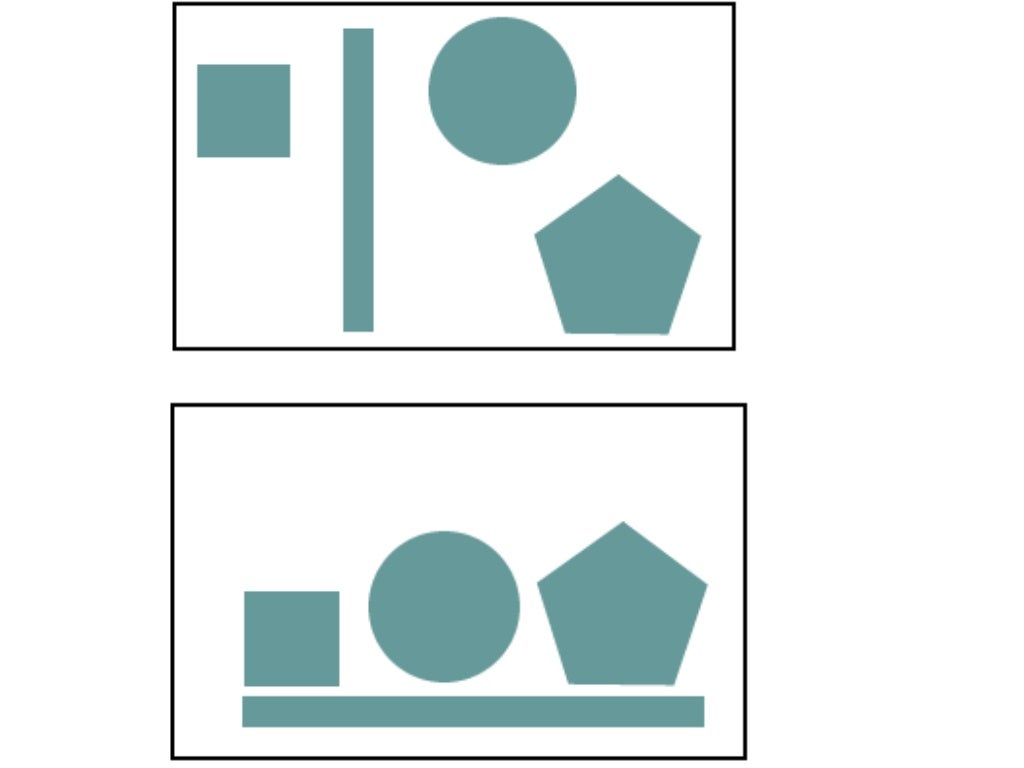
White Space
Balance refers to how the design is distributed and focused and should be considered with proximity. Alignment refers to the placement of objects and their connections in the design. This principle should also be considered when making use of proximity. It describes how humans perceive elements that are close together as more related than ones farther apart. This is so even if the elements differ in color, shape, size or otherwise. Designers use proximity to create clear, coherent layouts, guide users’ attention and reduce cognitive load.
Organize Your Details
The results revealed that the judged similarity of the figures failed to predict the degree to which the figures formed distinct perceptual groups. The study found that grouping was most strongly influenced by differences in the orientation of the lines composing the figures, with the crossing of lines also affecting grouping, albeit to a lesser extent than line orientation. This research provides valuable insights into the principles governing perceptual grouping, with implications for various fields, including psychology, visual perception, and user experience design.
Top Benefits of Proximity in Design Complete Guide
Proximity to 'Mushroom Capital of the World' Helps Fashion Student Design Mushroom Shoes - VISTA.Today
Proximity to 'Mushroom Capital of the World' Helps Fashion Student Design Mushroom Shoes.
Posted: Fri, 01 Jun 2018 07:00:00 GMT [source]
Additionally, clinical nurses can indirectly become role models for others by self-regulating their behaviours and attitudes [53]. Self-leadership related to one’s own behavioural control has also been shown to affect the performance of standard guidelines [54]. This comprehensive approach aimed to gain insights into how individuals perceive telehealth and their level of engagement with it. Second, remember that the human brain tends to naturally understand relationships in terms of ones, twos, and threes. Three is sort of the magic number in design, and it's generally recommended to try and group information or images into three spaces or fewer.
Purpose is a gold standard for engagement—so perhaps it’s the least novel strategy here—but it is significant. When people feel a sense of purpose, it translates into all kinds of payoffs from productivity to wellbeing. Create the conditions for wellbeing by providing food (including pizza!) and offering places with daylight, views and natural elements as well as places for privacy, collaboration, learning, socializing and rejuvenating.
Creating Contrast with White Space
When elements are positioned close together, the mind groups them together, creating a sense of unity and interconnectedness. After a while, you get to notice the vase in the background and realize it was there in the first place. As ambiguous as the Figure and Ground principle seems, designers usually create visually appealing surreal and illusionary art and web designs.
The gestalt principle of proximity — in action
An example of putting the proximity principle into practice can be seen in proximity art, where elements that share a visual relationship are grouped, thereby enhancing the overall composition and communication. By understanding what is an example of putting the proximity principle into practice, designers can effectively apply this concept in various artistic and design contexts. Graphic design refers to the use of media elements to create designs, such as including images, graphics, words, or a combination of these. Graphic design is typically used for things such as advertisements, websites, flyers, and other materials. Graphic design makes use of several principles, which include balance, alignment, white space, and proximity. Proximity in art and graphic design refers to the spatial relationship, or closeness, between elements.
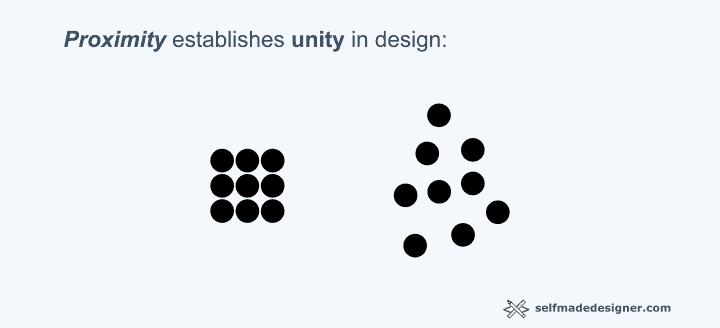
This simple adjustment can make a significant difference in the overall user experience. In this example from Crate & Barrel, options are grouped together under common headings, creating relationships, which makes scanning and finding information much easier. However, when the circles are pulled into close spacial proximity to one another, they are assigned a relation and are no longer perceived as separate objects. The examples of circles below show how proximity can be used to help us perceive objects as being related. As we see here, the circles are spread out, exhibiting no relation, with each being perceived as a separate object.
It’s easy to find the information and it’s certainly a little more appealing to the eye. We can take our list further with the law of proximity and create more logical groupings and put space between the items that shouldn’t be grouped together. Often when people are getting started with design, there is a temptation to throw everything on the page and fill up every square centimeter of space with type and images. However, it makes information difficult to digest and really doesn’t look good. Proximity in design simply means that objects near each other are seen as a unit.
Whether you're looking to revamp your brand, launch a new website, or create eye-catching marketing materials, our team is here to help. Visit our services page to discover how we can elevate your design projects with our expertise and creativity. As you dive into the depths of this article, prepare to uncover the subtle yet powerful ways proximity can transform your designs from good to great. Gapsy Studio’s expertise will illuminate the path to mastering this essential aspect of visual communication, from the basic understanding of this principle to its practical applications in various design projects. Whether you’re a seasoned designer or a curious enthusiast, exploring the proximity principle of design promises to enrich your understanding and inspire your creativity.
By using empty spaces effectively, one can achieve impressive results when designing a layout with organized units. This allows for desired contrasts while still maintaining cohesion within the arrangement. Allows for content and ad personalization across Google services based on user behavior. Permits storing data to personalize content and ads across Google services based on user behavior, enhancing overall user experience. You can organize related content for clarity using the laws of proximity and continuation.
Organizing similar information and separating dissimilar information improves the readability of your design, and it also creates white space between your groups. The arrangement of items within user interfaces may, at times, seem a minor detail, but we are finely tuned to perceive order and structure. When items are in close proximity we see them as belonging to, or forming the same group. Negative space and white must be effectively utilized for contrast, balance, grouping, and separating design elements. These spaces are needed so that proportions can look attractive and easily understood. Mastering such usage can enhance proximity between objects displayed, resulting in an even more visually pleasing outcome.


No comments:
Post a Comment